The Future of K-12 Web Filtering: AI vs. Human Review in 2027
Is the era of 24/7 human review centers coming to an end? Explore how Contextual AI is replacing high-latency human monitoring to keep students safe in real-time.
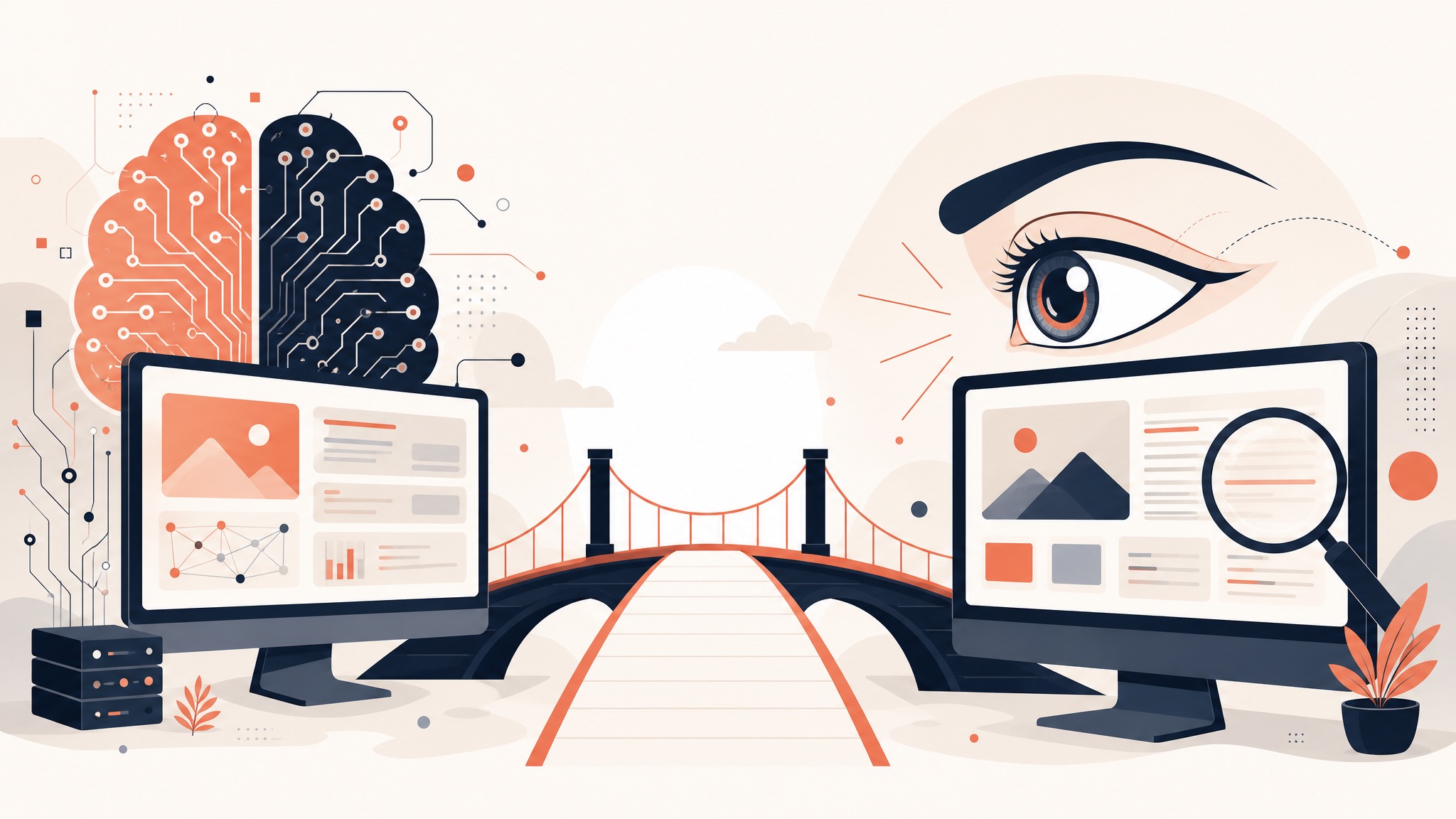
Since the mid-2010s, the "Gold Standard" for student safety monitoring has relied on a hybrid model: a software algorithm flags a potential concern, and a human being in a "Command Center" reviews it to decide if it warrants an emergency phone call to the school.
This model—pioneered by companies like Gaggle and Bark—was a massive leap forward from the days of simple word-filters. It acknowledged that language is complex and that a human eye is better at spotting the difference between a student researching a history project and a student in crisis.
But as we look toward 2027, the "Human Review" model is hitting a breaking point. The sheer volume of student data, the speed of the modern web, and the rise of Generative AI have exposed fundamental flaws in relying on manual intervention.
At KyberGate, we believe the future of student safety is AI-First, not AI-Augmented. This guide explores the shifting landscape of school filtering and why the "Human in the Loop" is becoming the bottleneck rather than the safeguard.
1. The Latency Gap: When Seconds Count
The primary promise of human review centers is that they are "watching 24/7." But "watching" and "acting" are two different things.
The Problem with Human Queues:
In a typical human-review workflow, an alert is generated and placed in a queue. Depending on the vendor's staffing levels and the time of day, that alert might sit for 15, 30, or even 60 minutes before a human reviews it.
The 2027 Reality: In a self-harm or active shooter scenario, a 20-minute latency is an eternity. By the time a human reviewer in a different time zone picks up the phone to call a principal, the crisis may have already unfolded.
The KyberGate AI Solution:
KyberGate's KyberPulse engine utilizes real-time Contextual NLP (Natural Language Processing). Our models don't just "flag" content; they "understand" it in milliseconds. If a student writes a goodbye note in a Google Doc at 2:00 AM, the alert is sent to the district's emergency contacts instantly. We remove the "Middle Man" to close the latency gap.
2. The Cultural Context Gap: Why Algorithms are Becoming More Accurate
One of the common arguments for human review is that "humans understand context better than computers." While this was true in 2018, the transformer-based models of 2026 have changed the math.
The Weakness of Outsourced Humans:
Many human review centers utilize outsourced labor or entry-level staff who may not share the cultural, regional, or linguistic context of the students they are monitoring.
- A reviewer in a different country might not understand local slang or the specific "coded" language used in a particular high school subculture.
- This leads to a high rate of "False Negatives" (missing real threats) and "False Positives" (flagging harmless banter).
The KyberGate AI Advantage:
Modern AI models are trained on massive, diverse datasets that include evolving slang, emoji meanings, and conversational nuances. Because the AI is integrated directly into the filtering proxy, it can see the "Full Path" of the student's behavior—what they searched for 5 minutes ago, what they wrote in a Doc 2 minutes ago, and what they are browsing now. This "Behavioral Arc" provides more context than a human looking at a single isolated snippet of text.
3. The Privacy Paradox: Who is Watching Your Students?
As student data privacy becomes a top priority for school boards, the idea of "Human Review" is coming under fire.
The Privacy Risk:
When a school uses a human-review service, they are essentially granting thousands of third-party contractors—who have no direct relationship with the school—permission to read student private emails and documents. Even with strict NDAs, the human element introduces a significant surface area for data misuse or voyeurism.
KyberGate's "Privacy by Design" model:
We believe student data should be for the eyes of the AI and the eyes of the school counselor—and no one else. By performing Private Inference in an isolated cloud sandbox, KyberGate identifies threats without ever exposing student PII to a global pool of reviewers.
4. The Scalability Crisis: Handling the "Data Deluge"
In 2015, a student might have generated 50 text-based interactions per day on a school device. In 2026, with collaborative 1:1 environments, that number is closer to 500.
Why Humans Don't Scale:
You cannot "staff up" your way out of the current data explosion. As districts generate more data, human review centers either:
- Raise Prices: To cover the cost of more reviewers.
- Lower Standards: By increasing the threshold of what gets flagged, essentially ignoring "Lower Priority" concerns to keep the queue manageable.
KyberGate's Elasticity: Our AI-driven engine scales infinitely. Whether your district has 500 students or 50,000, every interaction receives the same level of deep, real-time analysis for a fraction of the cost of a human-centric model.
5. The "Generative AI" Challenge: Filtering the AI itself
By 2027, students won't just be "visiting" websites; they will be interacting with AI-generated worlds and tutors. Traditional filters that look for "Bad Words" are useless against an AI that can rephrase inappropriate content on the fly.
The Next Generation of Detection:
To filter an AI, you need an AI. KyberGate’s AI Chat Monitor uses "Conversational Analysis" to monitor the intent of the interaction between the student and the chatbot. We look for patterns of grooming, radicalization, or academic dishonesty that a human reviewer would likely miss because the language appears "safe" on the surface.
Summary: The Roadmap to 2027
The transition from human-centric to AI-centric safety is already happening. As you plan your 2026-2027 technology stack, ask your current safety vendor these four questions:
- What is the median latency between a student flagging a self-harm concern and my team receiving an alert?
- Who are the humans reviewing the data, and where are they located?
- How do you handle privacy when a third-party reviewer sees sensitive student information?
- How does your engine adapt to Generative AI content in real-time?
Conclusion: Faster Safety for a Faster World
The "Human Review" center was a necessary bridge to the future, but that bridge is now being outpaced by technology. To keep students safe in 2027, schools need a solution that is as fast as the web itself—a solution that understands context, respects privacy, and acts in milliseconds.
At KyberGate, we aren't waiting for 2027. We built that solution today.
Ready to see the future of student safety?
Start a free 30-day pilot of KyberGate Pulse and compare our real-time AI alerts to your current human-review provider.
Download our Student Safety Whitepaper to learn more about our Contextual NLP technology.
#StudentSafety #EdTech #ArtificialIntelligence #K12IT #KyberGate #WebFiltering #AIvsHuman #FutureOfTech #DigitalCitizenship #PrivacyFirst
Ready to protect your students?
Deploy KyberGate in under 30 minutes. No hardware required.
Request a Demo