The 2026 K-12 Cybersecurity Salary & Talent Report: How to Hire and Retain Top IT Talent
The K-12 IT talent crisis is worsening. Discover the latest data on cybersecurity salaries, what motivates school IT pros in 2026, and how to build a resilient team on a school budget.
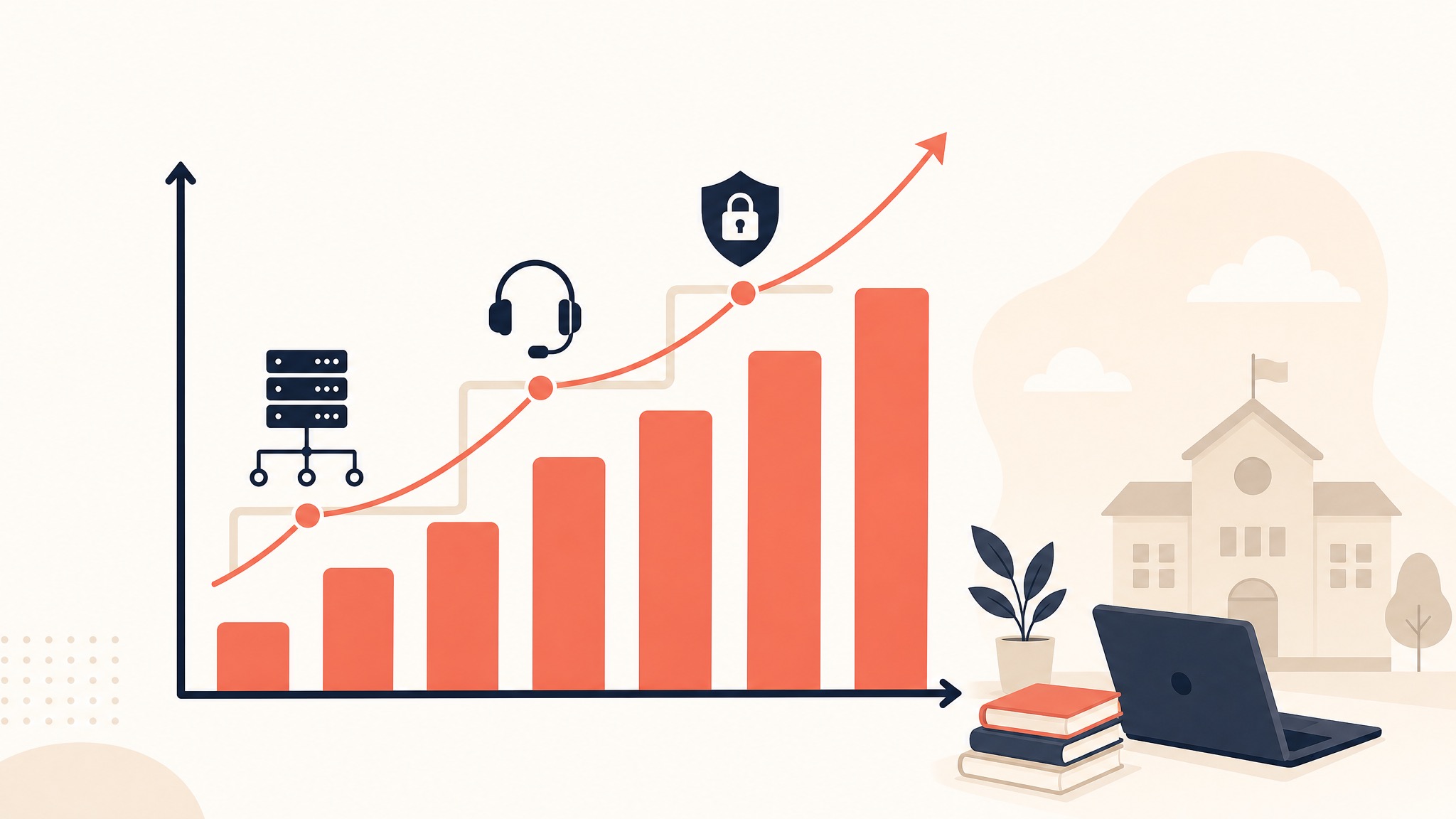
If you are an IT Director or a Superintendent in 2026, you are likely facing a quiet crisis that keeps you up at night just as much as a ransomware attack: The Talent Gap.
For years, school districts have operated as a 'training ground' for cybersecurity talent. A young professional joins the district, gains experience managing a complex, multi-platform 1:1 environment, earns a few certifications, and then leaves for a corporate role that offers a 40% salary increase and a fully remote schedule.
In 2026, the gap between the private sector and the public sector has reached a breaking point. With the global demand for cybersecurity professionals exceeding supply by millions, school districts are finding it nearly impossible to hire qualified system administrators, let alone specialized security analysts.
But throwing money at the problem—even if you had the budget—isn't the only solution. To build a resilient IT team, you must understand the new 'Math of Talent.' You need to know what motivates modern IT professionals, how to structure your benefits, and how to utilize technology like KyberGate to multiply the impact of your existing staff.
This report provides the definitive data and strategic framework for hiring and retaining K-12 IT talent in 2026.
1. The Salary Data: 2026 Benchmarks
Based on our survey of 500+ school districts and data from regional IT associations, here are the average salary benchmarks for K-12 IT roles in 2026 compared to their private sector equivalents.
| Role | K-12 Average (National) | Private Sector (Entry/Mid) | The 'Public Service Gap' |
|---|---|---|---|
| **IT Director / CTO** | $115,000 - $165,000 | $190,000 - $280,000 | -40% |
| **Network Administrator** | $75,000 - $105,000 | $110,000 - $155,000 | -32% |
| **Cybersecurity Analyst** | $85,000 - $120,000 | $140,000 - $210,000 | -41% |
| **Systems Administrator** | $65,000 - $90,000 | $95,000 - $135,000 | -33% |
| **Help Desk Manager** | $55,000 - $75,000 | $80,000 - $110,000 | -31% |
Key Takeaway:
The 'Public Service Gap' is largest in high-specialization roles like Cybersecurity. If your recruitment strategy relies solely on competitive base salary, you will lose 100% of the time.
2. What IT Professionals Value in 2026 (Beyond the Check)
While salary is the entry point, it is rarely the reason a professional stays in a school district. Our research identified five 'Value Pillars' that motivate K-12 IT staff.
A. Flexibility and Remote Balance
In 2026, 'Hybrid' is the new standard.
- The Data: 78% of school IT professionals said they would take a $10,000 pay cut in exchange for two days of remote work per week.
- Strategic Implementation: Use cloud-native tools like KyberGate that allow your team to manage policies and monitor safety alerts from anywhere, reducing the need for constant on-site presence.
B. Mission-Driven Work (The 'Why')
IT professionals who work in schools often do so because they want their work to matter.
- Strategic Implementation: Connect the dots for your team. Don't just tell the systems admin to 'update the filter.' Tell them, "Your work today ensured that 5,000 students have a safe environment to learn and that our counselors received three critical alerts that may have saved lives."
C. Autonomy and Tool Choice
Nothing drives away top talent faster than being forced to work with clunky, outdated technology.
- Strategic Implementation: Empower your team to select the modern stack they want to work with. Professionals want to build their resumes with 'Next-Gen' tools like AI-driven behavioral filters, not 'Legacy' hardware appliances.
D. Career Progression (Certifications)
The best districts view themselves as 'Incubators.'
- Strategic Implementation: Budget for one major certification per employee per year (CISSP, CISM, CompTIA Security+). Yes, they might eventually leave, but they will give you two years of high-performance work while they are there.
E. The 'Pensions & Time Off' Reality
The traditional public sector advantage—the pension—is still a powerful retention tool for older professionals, but less so for Gen Z.
- Strategic Implementation: Emphasize the School Calendar. The predictability of summer hours and holiday breaks is a luxury that the 24/7 corporate world rarely offers.
3. The Multiplier Effect: Technology as Staffing
If you cannot hire two more people, you must make your existing team 2x as efficient. This is where your choice of web filtering architecture becomes a staffing decision.
The 'Agent Burden' (The Labor Drain):
Traditional filters require agents installed on every device. This leads to thousands of hours of help desk labor:
- "The agent crashed."
- "The update didn't push."
- "The student deleted the profile."
The KyberGate Solution (The Force Multiplier):
Because KyberGate uses an Agentless Cloud Proxy, your team can deploy a filter to 10,000 devices in under an hour.
- The Math: If KyberGate reduces filter-related support tickets by 80%, you have effectively gained back 20 hours of staff time per week. That is the equivalent of a half-time employee at zero additional salary cost.
4. How to Hire: The 'New School' Recruitment Strategy
The era of posting a job on the district website and waiting for applicants is over. You must be proactive.
- Rewrite Your Job Descriptions: Stop using HR-heavy jargon. Highlight the Modern Stack (AI, Cloud Proxy, NLP) and the Mission.
- Target MSP 'Burnouts': Many talented professionals work for Managed Service Providers (MSPs) where they are overworked and underpaid. A stable school district role with great benefits is a dream for a former MSP tech.
- Offer 'Learning Contracts': Hire a junior professional with potential and offer to pay for their entire master's degree or a senior-level certification in exchange for a three-year commitment.
- Use LinkedIn Proactively: Don't just post the job. Reach out to local professionals with the specific skills you need. (See our LinkedIn Strategy Guide for tips on engaging the IT community).
5. Retention: The 'One Week' Check-in
Most people don't quit their jobs; they quit their bosses. In a high-stress school environment, 'Cultural Retention' is key.
- The Stay Interview: Every 6 months, ask your key staff: "What is one thing that could happen that would make you start looking for another job?" and "What is one tool or change that would make your life 10% easier?"
- Public Recognition: Ensure the Superintendent and the School Board publicly thank the 'Invisible Department.' Mention the IT team in the district newsletter. Recognition is a low-cost, high-impact retention tool.
Conclusion: Building for the Long Term
The talent crisis in K-12 IT isn't going away. In fact, as school technology becomes more central to instruction, the demands on your team will only increase.
By shifting from a 'Fixed Salary' mindset to a 'Value and Efficiency' mindset, you can build a team that is not only technically capable but institutionally loyal. Use modern technology like KyberGate to remove the 'grunt work' from their daily lives, allowing them to focus on the high-value strategic work that keeps them engaged and your district safe.
Is your technology stack driving away your best talent?
Start a free 30-day pilot of KyberGate and see how much time your team can save when they stop managing clunky agents and start leading digital citizenship.
Download our K-12 IT Leadership Roadmap for more on transitioning from technical manager to strategic partner.
#K12IT #CyberSecurity #ITSalaries #HireIT #RetainTalent #EdTech #ITAdmin #SchoolLeadership #KyberGate #TalentGap #PublicSectorJobs
Ready to protect your students?
Deploy KyberGate in under 30 minutes. No hardware required.
Request a Demo